![Beautiful DIY Envelope Liners with a Swan Theme [AI]](http://marryful.org/cdn/shop/articles/Envelope_Liner_7c7b979e-9cbe-45ec-bc2d-4f6825b3f4a2.jpg?v=1780662091&width=1600)
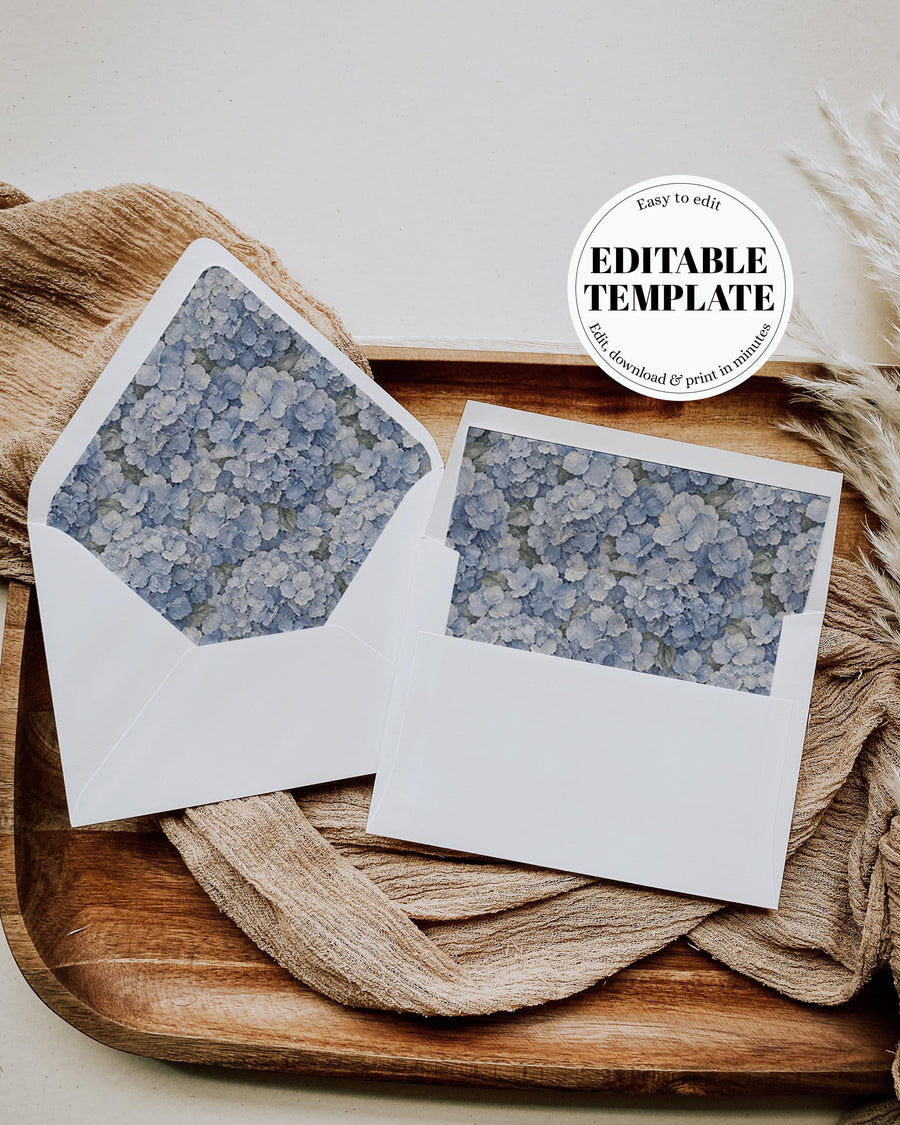
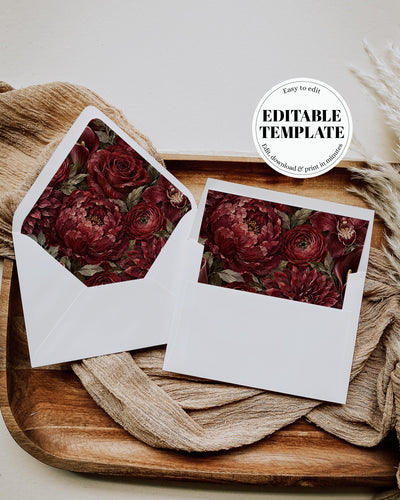
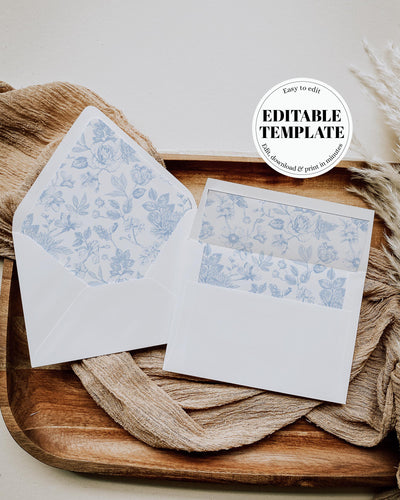
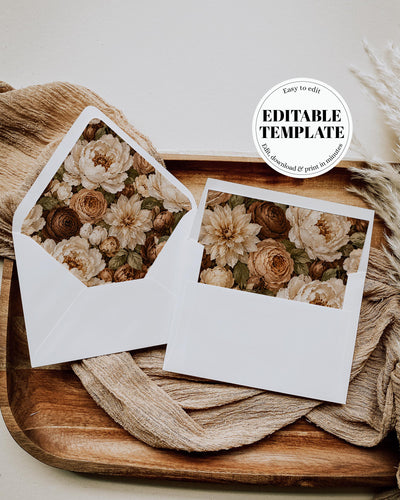
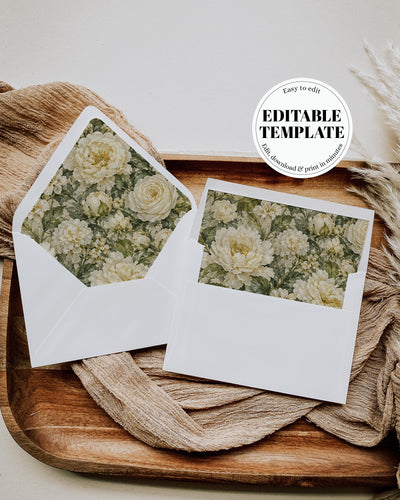
There's a quiet little wow when someone slides open your invitation and catches a flash of pattern tucked inside the envelope. It's a small thing, but it tells them this one's special before they've read a word. That flash is an envelope liner, and you can make your own from a template in an afternoon.
Here's how to make and assemble envelope liners from start to finish.
What you'll need
- Your envelope liner template, edited in Corjl
- Text-weight paper or thin cardstock (heavy cardstock won't fold cleanly)
- Scissors or a paper trimmer
- A scoring board or bone folder for a clean crease
- Double-sided tape or a glue roller
- Your envelopes (match the liner to your envelope size)
A few of the supply links above are Amazon affiliate links, so marryful may earn a small commission if you shop through them, at no extra cost to you.
How to make your envelope liners, step by step
Edit and print your liner
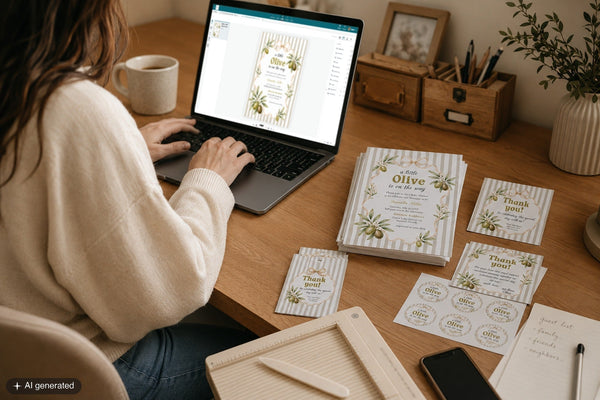
Personalise the design in Corjl if there's text to change, then print it at 100% scale. Use text-weight paper or thin cardstock. Liners fold along the flap, so anything too thick will crack instead of crease. Print at home, with Corjl Prints, or via Prints of Love.
Cut it out
Trim along the guide lines. If anything, cut a hair inside the line: a liner that's a touch smaller slides into the envelope cleanly, while one that's slightly too big will buckle.
Insert
Gently slide the liner down into the open envelope, pointed end up toward the flap, until it sits flush against the bottom.
Crease
Fold the envelope flap down over the liner. This presses a crease into the liner exactly where the flap bends, so the two move together instead of fighting each other. A scoring board or bone folder gives you the crispest fold.
Add adhesive
Open the flap back up and apply double-sided tape or glue to the top triangle of the liner only, not the whole thing. You want the liner anchored at the top so it stays put, while the rest sits naturally inside.
Seal
Close the flap firmly so the liner sits neatly in place. That's it: a plain envelope is now part of the design.
Set up a little assembly line. If you're lining a whole stack, do them in batches: cut them all, insert them all, then tape and seal in one pass. It's far quicker than finishing one envelope end to end before starting the next.
Envelope liner questions, answered
What size liner do I need?
It needs to match your envelopes, so check your product description for the size and the envelope it's made for (A7 envelopes for 5×7 invitations are the most common). Buy your envelopes first if you can, so you know exactly what you're matching.
What paper should I print on?
Text-weight paper or thin cardstock. Liners have to fold with the envelope flap, so skip the heavy cardstock. It won't crease cleanly and can crack.
Do the liners come pre-cut?
No. This is a digital template, so you print and cut them yourself. That keeps it affordable and lets you make as many as you need.
Why only glue the top triangle?
So the flap still folds naturally. Gluing the whole liner stiffens the flap and makes it awkward to close; anchoring only the top keeps everything moving the way an envelope should.
Where can I print them?
At home on text-weight paper, with Corjl Prints (built into Corjl), or through Prints of Love. See our paper sizes guide for more.
Print, cut, insert, crease, tape, seal: six small steps, and every envelope you send looks like it came from a stationer.
Prefer to watch? Here's the assembly in under a minute (sound on).