Your best friend just got engaged. You got tapped as maid of honour somewhere between the second cocktail and the third group chat, and now — sitting at your kitchen table on a quiet Sunday — the question hits: who actually plans the bridal shower? You? Her mum? Both? When does it happen? Who pays? How many people do you invite, and is it weird if you don't know half of them?
This is the etiquette guide we wish someone had handed us the first time we hosted one. The short answers are below; the long version explains why the rules say what they say, and which of them have quietly stopped applying in the last few years.
👉 If you're already past the etiquette and want the playbook, jump to How to Plan a Bridal Shower for the 6-week countdown, or 15 themes for 2026 if you're still picking the look.
Who plans the bridal shower?
Traditionally, the maid of honour and the bridesmaids host the bridal shower together. The historical reasoning is a bit dated — the bride's mother and immediate family weren't supposed to host because it looked like gift-grubbing on behalf of the family. That rule has loosened significantly in the last decade.
In 2026, the most common setup is a co-hosted shower — two or three people splitting the planning and the cost. The most common combinations:
- Maid of honour + the bridesmaids. The classic structure. Works well when the bridal party is close and one person isn't doing all the work.
- Mother of the bride + maid of honour. A modern combination, particularly if the MOH is younger and could use the budget support, or if the bride's mother wants to be involved.
- A close friend or aunt who isn't in the bridal party. Particularly common for second weddings, mature brides, or destination weddings where the bridal party is travelling.
- Two showers, two hosts. One thrown by the bride's side, one by the groom's side. More common in larger families or long-distance friend groups. Some brides love this; others find it exhausting — ask first.
Who pays for the bridal shower?
Whoever hosts pays. Simple in theory, more nuanced in practice.
If the maid of honour and bridesmaids are co-hosting, they split the cost — usually evenly, sometimes by category. A common split: one host covers food and drinks, another covers decor and printables, a third covers the favours and the cake. Splitwise or a shared Notes file works perfectly for tracking who paid for what.
If a parent or family friend is hosting, they cover the lot — and the bridal party often chips in by bringing the activities, the games, or contributing to the gift.
What guests pay: nothing. Guests bring a gift and that's the contribution. Asking guests to chip in for the cost of the shower itself is considered poor form across pretty much every etiquette guide we've ever read.

When should the bridal shower be?
One to three months before the wedding is the standard window. Six to eight weeks before the wedding is the sweet spot — close enough that the wedding excitement is building, far enough that you're not stepping on the rehearsal-dinner timeline or eating into final wedding-prep weeks.
Avoid the two weeks immediately before the wedding (the bride is in final-fitting / seating-chart hell), and avoid the same weekend as the bachelorette weekend (guests can't make both).
If the bride is having a destination wedding or her friends are scattered, a slightly earlier shower (10–12 weeks out) gives travel-heavy guests time to plan.
Who should be invited to the bridal shower?
The golden rule, and it has not changed: everyone invited to the bridal shower should also be invited to the wedding. Inviting someone to the shower but not to the wedding sends a clear "I want your gift but not your presence" message, and it ends friendships.
Beyond that, the shower is traditionally an intimate event — 15 to 30 guests — drawn from:
- The bridal party
- The bride's mother and sisters (and the groom's, if close)
- The bride's closest friends from different chapters of her life
- A small number of aunts, cousins or family friends she's particularly close to
If the wedding guest list is small (under 40), the shower list should be smaller still. If the wedding is huge, the shower can be slightly bigger — but most hosts find that even at a wedding of 200, the shower works best at 25 or under. Smaller showers photograph better and guests actually get to talk to the bride.
How long should the bridal shower last?
Two to three hours is the sweet spot. Long enough to play two or three games, eat a meal, open gifts, and have a toast. Short enough that the energy stays up and the bride isn't completely worn out by the time guests leave.
The rough flow:
- 30 minutes: Arrivals, drinks, mingling.
- 45 minutes: Brunch or lunch, served family-style or as a grazing board.
- 45 minutes: Games (two or three, max) and the activity stations.
- 30 minutes: Gift opening and toasts.
- 15 minutes: Cake, last drinks, goodbyes.
Do guests bring a gift to the bridal shower?
Yes. The bridal shower gift is separate from the wedding gift — guests bring one of each. The shower gift is usually smaller (€25–€75 range is common) and traditionally pulled from the bride's registry. Modern variations:
- Stick to the registry. The cleanest option. The bride has chosen these things for a reason; they'll get used.
- A "round the clock" theme. Each guest is assigned a time of day (8am, 11am, 7pm) and brings a gift tied to it — a coffee maker for 8am, a wine decanter for 7pm. Often used by hosts who want a structured theme.
- A "stock the bar" or "stock the kitchen" theme. Each guest brings a bottle of wine or a specific kitchen item the registry didn't cover.
- Gift cards or cash. Increasingly common, particularly when the couple already lives together and doesn't need a second toaster.
What do you wear to a bridal shower?
Cocktail attire, smart-casual, or whatever the theme dictates. The default for a daytime shower is a midi dress or skirt-and-blouse in a soft colour — pink, ivory, sage, or pastel. Avoid white (don't out-shine the bride) and avoid black (too sombre for a daytime celebration).
If the host has set a theme, the dress code usually follows. A Mama Mia theme suggests Mediterranean colours. A Bow theme might suggest a coquette pink. A Modern Coastal theme suggests blue stripes or white linen. The invitation will usually call it out.
The bride traditionally wears white or ivory — it's the only event where she gets to wear bridal white before the wedding. Many brides save it for this reason.
The cutest themes to try right now
The theme does most of the heavy lifting at a bridal shower — it gives the décor a direction, the menu a hint, and the photos a story. Six of our most-loved themes for 2026, each linking to the full guide:
Bridal shower etiquette FAQ
Is it OK if the bride's mother hosts the bridal shower?
Yes. The "the mother doesn't host" rule is one of the etiquette traditions that has quietly retired. Plenty of brides have showers hosted by their mums, mothers-in-law, or a combination. The only event where the old rule still genuinely applies is when the bride's mother is hosting a very large, very gift-heavy shower and the optics feel uncomfortable — at which point a co-host (the maid of honour, for example) takes the edge off.
Can the bride throw her own bridal shower?
It's possible, but it's generally not recommended — partly because it removes the surprise, partly because asking guests to come to "your" shower feels gift-grabby in a way that someone else hosting doesn't. A workaround: the bride helps with planning logistics (venue, theme) but a friend or family member is the named host on the invitation.
Should the groom be at the bridal shower?
Traditionally no — bridal showers are women-only. Modern variation: many showers are co-ed now, particularly for couples whose friend group is mixed-gender, or for "Jack and Jill" showers that combine bridal and groom celebrations into one event. Either is acceptable. Ask the bride what she'd like.
How is a bridal shower different from a bachelorette party?
The bridal shower is the daytime, structured, gift-centred event with a tightly themed guest list (close friends and family). The bachelorette party is the evening or weekend event with a younger, friends-heavy guest list — usually involves cocktails, possibly travel, and the energy is "let's get loud" rather than "let's open presents".
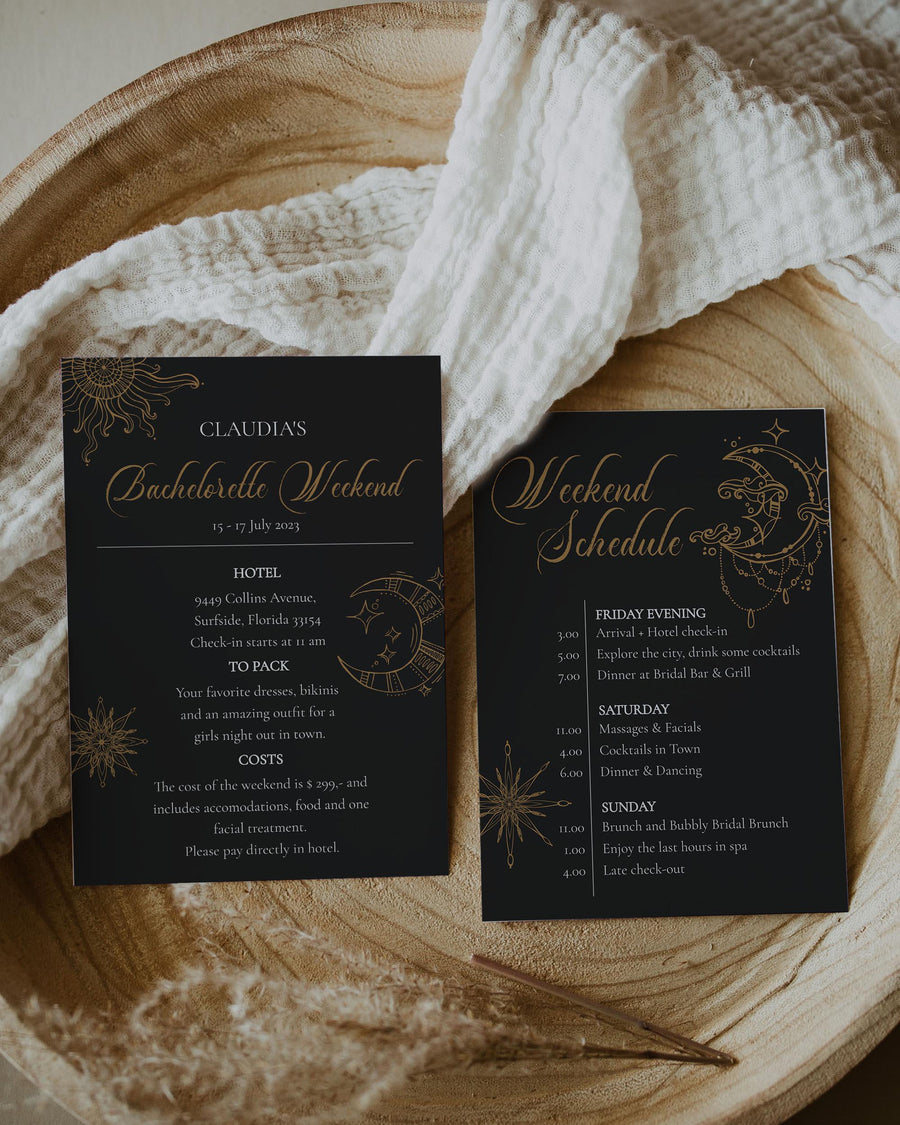
It's normal to have both: a bridal shower a few months before the wedding, a bachelorette weekend slightly closer to the date. Some brides choose one or the other to simplify.
Do you have to invite the mother-in-law to the bridal shower?
Yes — and the groom's sisters, his close aunts, and anyone from his side the bride considers family. The shower is a chance for both families to spend time together before the wedding. The only exception: if the relationship is fraught and including her would genuinely strain the day, the bride and host can have a conversation about a separate "in-laws tea" instead.
What if some guests can't make it?
Standard. Bridal showers are not all-attend events — RSVPs typically run 70–80%. The host plans for the confirmed number plus 10% buffer. Guests who can't attend usually send a gift (delivered directly or to the host's address) and a card.
Do you need to send physical invitations?
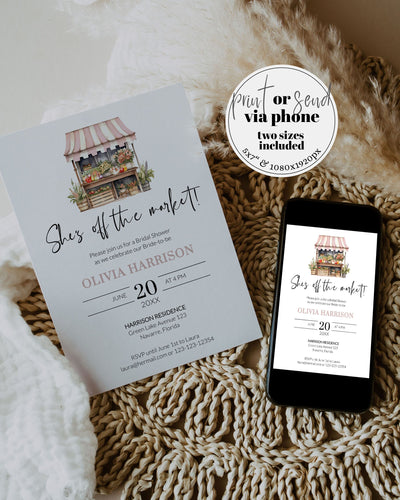
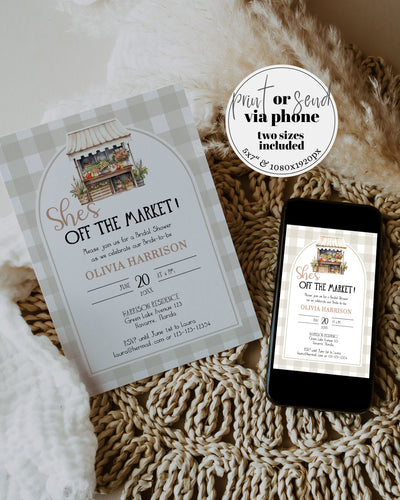
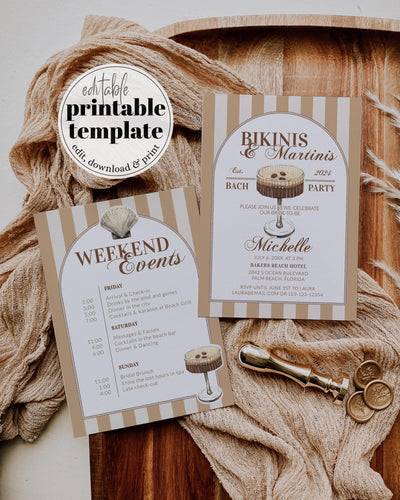
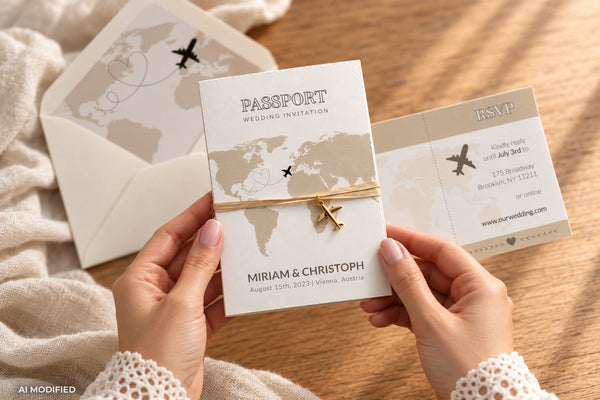
Digital invitations are completely acceptable in 2026 and many showers run on digital alone for speed. That said, a printed invitation by post still carries weight — older relatives appreciate it, and the bride often keeps one as a keepsake. An editable printable invitation lets you do both: send the PDF for fast RSVPs and mail the printed version to anyone you want to delight.
How early should you send bridal shower invitations?
Four to six weeks before the shower is the standard window. Earlier for destination guests or anyone travelling. Save-the-dates aren't traditional for a bridal shower, but if the wedding is also asking for travel, a heads-up text 8 weeks out is appreciated.
The etiquette's sorted. Now for the printables.
Editable bridal shower invitations, welcome signs, menu cards, place cards, favour tags and games across every theme. Edit in your browser, print at home or with your preferred print service.
Shop the bridal shower collection →